
Innovating Business Through Industrial 3D Printing: How Additive Manufacturing Is Reshaping Production
Industrial 3D printing has moved far beyond its early role as a prototyping tool. Today, it is increasingly integrated into real manufacturing workflows, influencing how companies design products, manage supply chains, and approach production efficiency. As industries continue to adapt to technological change, additive manufacturing is becoming part of broader business strategy rather than a standalone experiment.
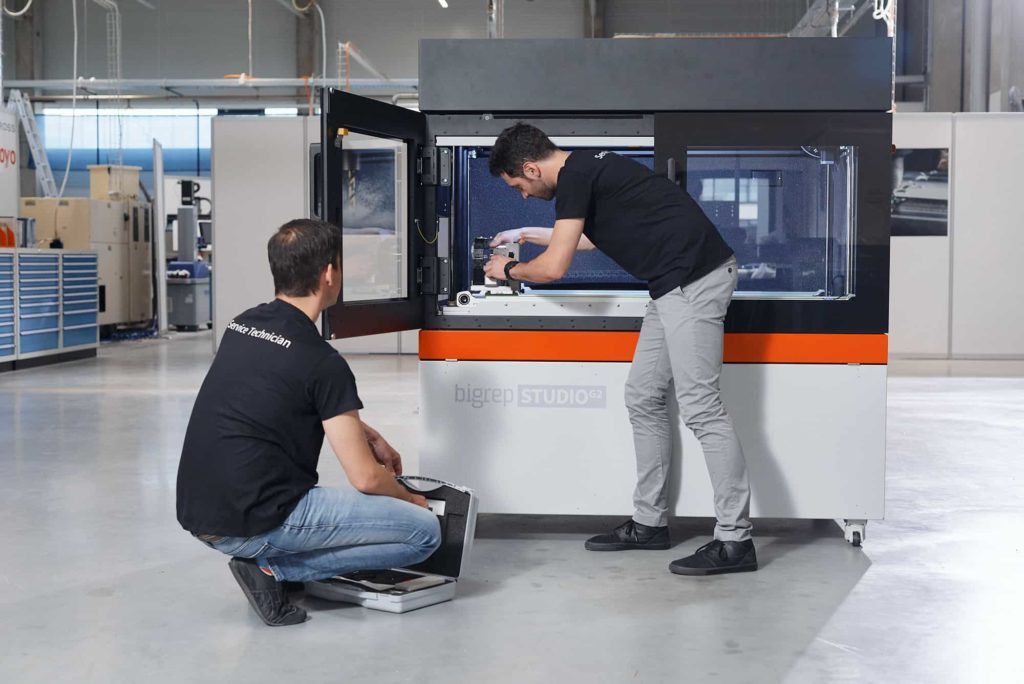
How Industrial 3D Printing Reached the Production Floor
Additive manufacturing first appeared decades ago as a way to quickly create physical models from digital designs. Over time, improvements in materials, precision, and machine reliability expanded its use cases. What began as a development aid gradually evolved into a method for producing functional components.
Industries such as automotive, aerospace, and healthcare were among the first to explore these possibilities. Their experience demonstrated that 3D printing could support low-volume production, complex geometries, and rapid design adjustments that traditional methods struggle to achieve.
The Role of 3D Printing in Modern Business Operations
In current industrial settings, 3D printing supports flexibility and responsiveness. By producing parts layer by layer, companies can manufacture components with intricate internal structures that would be difficult or impossible to create using conventional tooling.
On-demand production is another defining characteristic. Instead of maintaining large inventories, some businesses produce parts only when needed, reducing storage requirements and material waste. This approach can simplify logistics and shorten production cycles, particularly for specialized or customized components.
Operational Changes Driven by Additive Manufacturing
The integration of 3D printing into manufacturing workflows affects multiple aspects of operations. Design teams can iterate more quickly, adjusting digital models without retooling physical molds. Production teams benefit from fewer assembly steps when complex parts are printed as single units.
Localization of production is another shift enabled by additive manufacturing. Components can be produced closer to where they are used, reducing transportation time and associated costs. At the same time, companies must address new considerations, such as equipment investment, workforce training, and data protection for digital design files.
Challenges That Businesses Continue to Evaluate
Despite its advantages, industrial 3D printing is not without limitations. Initial costs for industrial-grade printers and materials can be significant. Businesses also need skilled operators who understand both the machines and the design software behind them.
Intellectual property protection is another ongoing discussion. As designs are stored and transferred digitally, companies must consider how to safeguard proprietary information. These factors often influence how quickly and extensively organizations adopt additive manufacturing.
How Companies Explore 3D Printing Adoption
Many businesses begin with small-scale projects rather than full production shifts. Pilot programs allow teams to evaluate feasibility, costs, and workflow impact before expanding use.
Training plays a central role in this process. Effective use of 3D printing depends on understanding material behavior, design constraints, and machine capabilities. Organizations that invest in skill development tend to integrate the technology more successfully over time.
Assessing whether 3D printing fits a specific business often depends on product complexity, customization needs, and production volume. It is most commonly used where traditional manufacturing methods face limitations.
Looking Ahead at Industrial 3D Printing
Advances in materials science and printer technology continue to broaden the range of applications for additive manufacturing. As machines become faster and more precise, and as material options expand, 3D printing is likely to play a growing role in industrial production.
Rather than replacing traditional manufacturing entirely, it is increasingly viewed as a complementary tool. Businesses that understand where and how to apply it effectively may gain greater flexibility and resilience in changing markets.
Industrial 3D printing represents an ongoing shift in how products are designed and produced. For organizations willing to adapt, it offers new ways to streamline processes, respond to demand, and rethink long-established production models.
This article is for informational purposes only and does not constitute technical or business advice.