
Average cost of dental implants: what the number actually tells you (and what it hides)
At first glance, this looks like a simple question.
What is the average cost of dental implants?
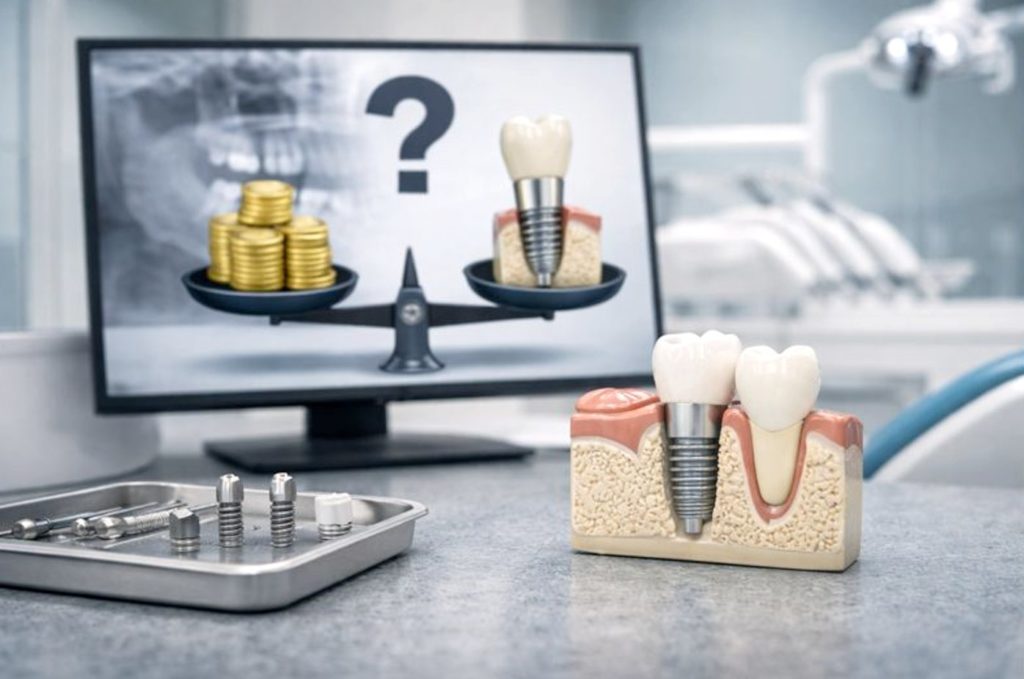
But people rarely ask it out of pure curiosity.
They ask it at a crossroads.
Because somewhere behind that number is a decision about health, comfort, time, and money — not just dentistry.
So before we pin a price tag on implants, let’s slow this down and make the number useful.
Editorial context: why “average cost” is a misleading starting point
The word average feels reassuring.
Neutral. Objective.
In reality, it often hides more than it reveals.
Dental implants are not a standardized retail product.
They are a process, shaped by anatomy, planning choices, timelines, and follow-up care.
That’s why two people can both pay the “average cost” — and have very different experiences afterward.
Who this is for
- You’re researching the average cost of dental implants to plan realistically
- You want to understand what’s usually included — and what isn’t
- You’re comparing implants to bridges or dentures
- You care about long-term implications, not just today’s bill
Who this is NOT for
- You’re looking for the cheapest implant option available
- You want a fixed, guaranteed price
- You need urgent dental surgery immediately
- You expect implants to be a one-visit solution
Average cost of dental implants: the numbers people usually see
When clinics and studies talk about averages, they typically refer to one implant with crown.
Here’s what that looks like in broad terms:
| Region | Average cost per implant |
|---|---|
| United States | $3,000 – $5,000 |
| Western Europe | €2,000 – €3,500 |
| Southern Europe | €1,200 – €2,500 |
| Eastern Europe | €900 – €1,800 |
| Mexico | $900 – $1,800 |
| Southeast Asia | $1,000 – $2,200 |
These ranges are not promotional prices.
They reflect what patients commonly encounter after initial consultations.
And this is where the real questions begin.
What the average cost of dental implants usually includes — and excludes
The biggest mistake people make is assuming the “average cost” covers everything.
Often, it doesn’t.
Commonly included
- implant fixture
- abutment
- final crown
- basic placement procedure
Often excluded
- CT scans and diagnostics
- bone grafting or sinus lift
- temporary crowns
- post-operative adjustments
- long-term monitoring
This is why averages feel slippery.
Two quotes can look similar — until the details surface.
Why the average cost of dental implants varies so widely
The implant itself is rarely the main driver.
1. Planning depth
More diagnostics mean higher upfront cost — but fewer surprises later.
2. Surgical complexity
Bone density, spacing, and bite alignment change the scope of work.
3. Follow-up structure
Implants are not “place and forget.”
Monitoring and adjustments are part of the real cost, even if they’re not itemized.
Research suggests that continuity of care plays a significant role in long-term implant success, which explains why clinics with structured follow-up often charge more.
Average cost vs lifetime cost (the distinction most people miss)
Here’s a useful reframe.
The average cost of dental implants is not the same as their lifetime cost.
Over 10–20 years:
- bridges may need replacement
- dentures often require refitting
- adjacent teeth can be affected
Implants concentrate costs early, rather than spreading them unpredictably.
For some people, that predictability is worth paying for.
For others, it isn’t — and that’s a valid conclusion.
Comparing implants to alternatives (decision snapshot)
| Dental implants | Bridges / dentures |
|---|---|
| Higher upfront cost | Lower initial price |
| Designed for long-term stability | More frequent replacements |
| Independent of other teeth | Often affect neighboring teeth |
| Requires surgery and healing | Less invasive initially |
This table doesn’t rank options.
It highlights trade-offs.
When the average cost of dental implants makes sense
Implants tend to justify their cost when:
- bone structure is favorable
- long-term stability matters
- follow-up care is accessible
- the alternative would create repeated future expenses
Studies have shown that patient satisfaction with implants is often linked to functional comfort and confidence, not just aesthetics — factors that accumulate over time.
When the average cost may not be worth it
There are also clear cases where implants may not be the right move right now:
- extensive grafting is required
- healing capacity is compromised
- travel or follow-up is difficult
- expectations lean toward immediate results
Cost alone doesn’t decide this.
Context does.
Decision markers to pause on before accepting the “average”
Before committing, it helps to ask:
- What exactly is included in this quote?
- What happens if timelines extend?
- Who handles adjustments months later?
- How would I feel if this takes longer than planned?
These questions don’t slow the process.
They sharpen it.
What happens after you move forward
Once you accept an implant plan, the process usually unfolds like this:
- diagnostics and planning
- implant placement
- healing and integration
- final crown placement
- periodic monitoring
Understanding this sequence early often reduces frustration later.
FAQ: average cost of dental implants
Is the average cost the final cost?
Not always. Additional procedures can change the total.
Why do some clinics quote much lower prices?
Lower overhead, fewer inclusions, or limited follow-up can all affect pricing.
Do implants last forever?
They are designed for long-term use, but longevity depends on care and health.
Can I delay the decision?
Often yes — but prolonged delay may affect bone structure and future options.
Final perspective: why the average is only the beginning
The average cost of dental implants is a reference point — not an answer.
It helps you enter the decision.
It doesn’t finish it.
The most satisfying outcomes usually come from aligning:
- anatomy
- expectations
- timelines
- and long-term priorities
Not from chasing the lowest or highest number on the page.
And that’s exactly how this decision is meant to feel:
thoughtful, unfinished, and intentionally personal.
Editorial team at BeautyHealth.top
Research-based consumer guides