How Everyday Habits Shift After 60 — and Why the Small Stuff Matters More Than You Think
Turning 60 doesn’t flip a switch overnight. Most people wake up the next day feeling largely the same — just with a slightly louder body and a quieter tolerance for nonsense.
What does change, often subtly, is how everyday habits affect how you feel, move, and think.
The surprising part? After 60, small adjustments matter more than dramatic overhauls. Not because your body is fragile — but because it’s more honest. It responds quickly, both to care and to neglect.
Aging Well Isn’t About “Staying Young”
Healthy aging isn’t about chasing your 30-year-old self. It’s about staying capable — getting up from a chair without thinking about it, walking confidently, remembering names, sleeping through the night.
Research suggests that lifestyle choices made after 60 still have a strong influence on physical function, cognitive health, and independence later in life. In other words, it’s not “too late” — it’s actually a very responsive phase.
The focus shifts:
- from performance → function
- from aesthetics → resilience
- from intensity → consistency
That change alone takes pressure off.
Movement Changes — but It Becomes More Valuable
You don’t need harder workouts. You need useful movement.
After 60, muscle mass and balance matter more than speed or max strength. Studies have shown that even light resistance training helps preserve muscle and bone density, especially when done consistently.
What tends to work best:
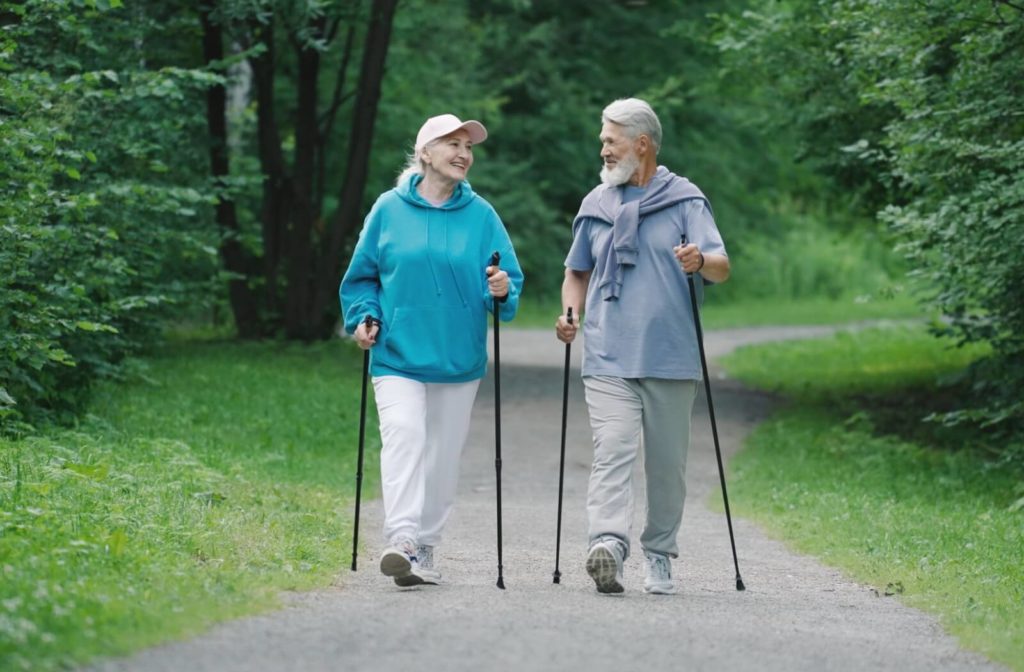
- short walks, often
- light strength work 2× per week
- balance-focused movement (stairs, single-leg stands, tai chi)
Falls are one of the biggest threats to independence in later life — and balance training quietly reduces that risk without feeling like “exercise.”
And yes, activities you enjoy count. Golf, gardening, dancing, pickleball — they all keep the system awake.
Your Brain Needs Social Calories
Cognitive health isn’t just puzzles and memory games.
It’s conversation, novelty, laughter, and routine disruption.
Population data shows that social isolation is strongly linked to faster cognitive decline, while regular social engagement acts as a protective factor. This doesn’t mean forcing yourself into loud groups — it means staying mentally exposed to other people’s ideas, humor, and unpredictability.
Even small habits help:
- weekly coffee with the same people
- volunteering once a month
- learning something mildly uncomfortable
The brain likes friction — gentle friction.
Food Becomes Less About “Less” and More About “Enough”
After 60, under-fueling becomes more common than overeating.
Protein, in particular, is often too low. Research suggests older adults benefit from slightly higher protein intake to support muscle maintenance and recovery. That doesn’t require supplements or strict tracking — just intentional inclusion at each meal.
Simple shifts:
- protein at breakfast, not just dinner
- fewer “empty” snacks, more nutrient-dense ones
- prioritizing fiber for digestion and cholesterol balance
Eating well after 60 isn’t restrictive. It’s selective.
Hydration Quietly Affects Everything
Thirst signals weaken with age. The need for fluids doesn’t.
Even mild dehydration can contribute to fatigue, dizziness, confusion, and constipation — issues often blamed on “aging” itself. According to clinical observations, older adults are more likely to become dehydrated without realizing it.
Water doesn’t need to be boring. Tea, soups, high-water fruits, mineral water — it all counts. The key is regularity, not volume in one sitting.
Why Small Adjustments Win
Big plans fail. Small habits stick.
A 10-minute walk becomes 20.
One strength session becomes routine.
One glass of water becomes a habit.
After 60, the body rewards consistency quickly — sometimes within weeks. Energy improves. Sleep stabilizes. Confidence creeps back in.
The real shift isn’t physical. It’s psychological:
“I can still influence how I feel.”
That realization changes everything.
A Thought to Leave You With
Healthy aging isn’t about doing more.
It’s about doing what matters, a little more often.
The question isn’t “What should I overhaul?”
It’s “What’s the smallest change I’d actually keep?”
And once you find that — what might the next one be?