
Laser Eye Surgery: A Clearer View on Vision Correction
For many people, glasses and contact lenses are part of everyday life. But modern laser eye surgery has made it possible to reduce — and in some cases completely eliminate — the need for corrective eyewear. By using advanced laser technology to reshape the cornea, this procedure helps the eye focus light more accurately, resulting in sharper vision.
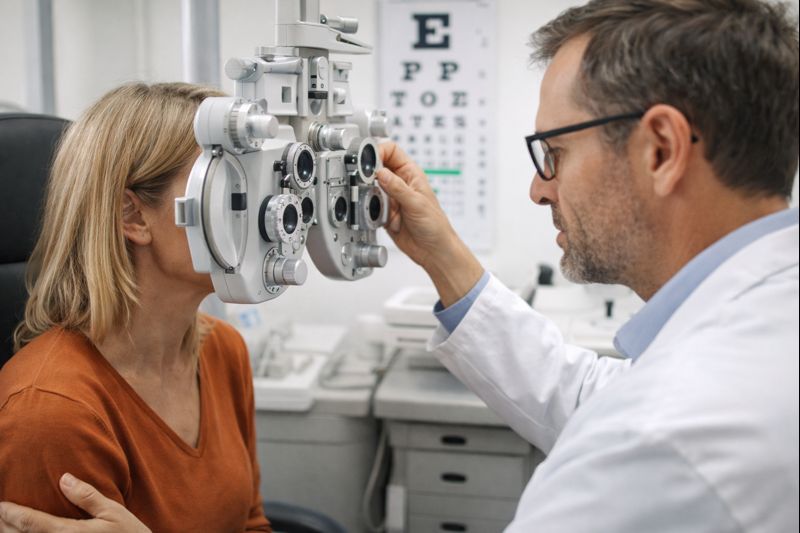
Laser eye surgery has become one of the most important breakthroughs in vision correction. Millions of patients worldwide have already benefited from it, and ongoing technological improvements continue to make the procedure safer, more precise, and more predictable. Understanding how it works and what to expect can help you decide whether it’s the right option for you.
How Laser Eye Surgery Improves Vision
At the heart of laser vision correction is the cornea — the transparent, curved surface at the front of the eye. Its job is to bend light so it focuses precisely on the retina. When the cornea’s shape isn’t ideal, light scatters instead of focusing properly, leading to blurred vision.
Laser eye surgery works by carefully removing tiny amounts of corneal tissue to reshape its curvature. This process allows light to focus correctly, improving visual clarity.
LASIK is the most well-known technique. During LASIK, a thin flap is created on the surface of the cornea, the underlying tissue is reshaped using an excimer laser, and the flap is then repositioned. Other procedures, such as PRK and SMILE, use different methods to access and reshape the cornea but aim for the same result — clearer, more accurate vision.
Vision Problems Commonly Treated with Laser Surgery
Laser eye surgery is designed to correct several common refractive errors.
Nearsightedness (myopia) occurs when the cornea is too steep, causing distant objects to appear blurry. The laser gently flattens the cornea to improve distance vision.
Farsightedness (hyperopia) happens when the cornea is too flat, making close-up tasks more difficult. In this case, the laser steepens the cornea to enhance near focus.
Astigmatism is caused by an uneven corneal shape, leading to distorted or blurry vision at all distances. Laser treatment smooths the cornea into a more symmetrical shape, significantly improving overall clarity.
Many patients experience more than one of these conditions, and modern laser systems are capable of correcting multiple issues during a single procedure.
What to Expect Before and After the Procedure
Preparation is an important part of successful laser eye surgery. Before treatment, a detailed eye examination is performed to determine whether you’re a suitable candidate. This includes measuring corneal thickness, pupil size, prescription stability, and overall eye health. Contact lens wear usually needs to be stopped for a period before surgery, as lenses can temporarily alter corneal shape.
The procedure itself is quick, often lasting less than 30 minutes per eye. The laser portion takes only a few minutes, and numbing eye drops help keep discomfort to a minimum.
Recovery depends on the technique used. LASIK patients often notice improved vision within hours, while PRK requires a longer healing period, sometimes taking several days or weeks. During recovery, medicated eye drops help prevent infection and reduce inflammation, and follow-up visits allow the doctor to monitor healing and visual outcomes.
Benefits Beyond Clearer Vision
One of the biggest advantages of laser eye surgery is freedom from glasses and contact lenses. Many patients achieve vision close to or better than 20/20, making everyday activities — such as sports, travel, and swimming — far more convenient.
Over time, the procedure can also be cost-effective. Although the upfront cost is significant, eliminating ongoing expenses for eyewear, lenses, and solutions often leads to long-term savings. Many people also report increased confidence and comfort in daily life after surgery.
Results are usually long-lasting, though natural aging changes, such as presbyopia, may still affect vision later in life. Only a small percentage of patients require enhancement procedures.
Typical Costs and Treatment Options
| Procedure Type | Provider | Estimated Cost |
|---|---|---|
| LASIK | Optical Express | £1,500–£2,500 per eye |
| PRK | Moorfields Eye Hospital | £1,200–£2,000 per eye |
| SMILE | London Vision Clinic | £2,000–£3,000 per eye |
| Presbyond | AccuVision | £2,500–£3,500 per eye |
Prices are approximate and may vary depending on location, technology used, and individual case complexity. Independent research is recommended before making financial decisions.
Why a Specialist Consultation Is Essential
Laser eye surgery is not suitable for everyone. A qualified eye specialist will assess factors such as age, prescription stability, corneal thickness, and general eye health. Most candidates are at least 18 years old and have had a stable prescription for a minimum of one year.
Certain conditions — including severe dry eyes, very thin corneas, autoimmune disorders, or pregnancy — may make surgery unsuitable. During your consultation, the specialist will discuss potential risks, expected outcomes, and whether alternative treatments might be more appropriate.
It’s also important to ask about the surgeon’s experience, success rates, and the type of laser technology being used.
Final Thoughts
Laser eye surgery has changed the way vision problems are treated, offering many people a long-term alternative to glasses and contact lenses. While it isn’t the right choice for everyone, patients who are good candidates often describe the results as life-changing.
Choosing an experienced provider, understanding the procedure, and following all medical advice before and after surgery are key factors in achieving the best possible outcome.
Disclaimer: This article is for informational purposes only and does not constitute medical advice. Always consult a qualified eye care professional for personalized recommendations and treatment.