Natural-Looking Tan Over Time: Why Self-Tanner Often Fails Before It Starts
There’s a moment many people recognize instantly.
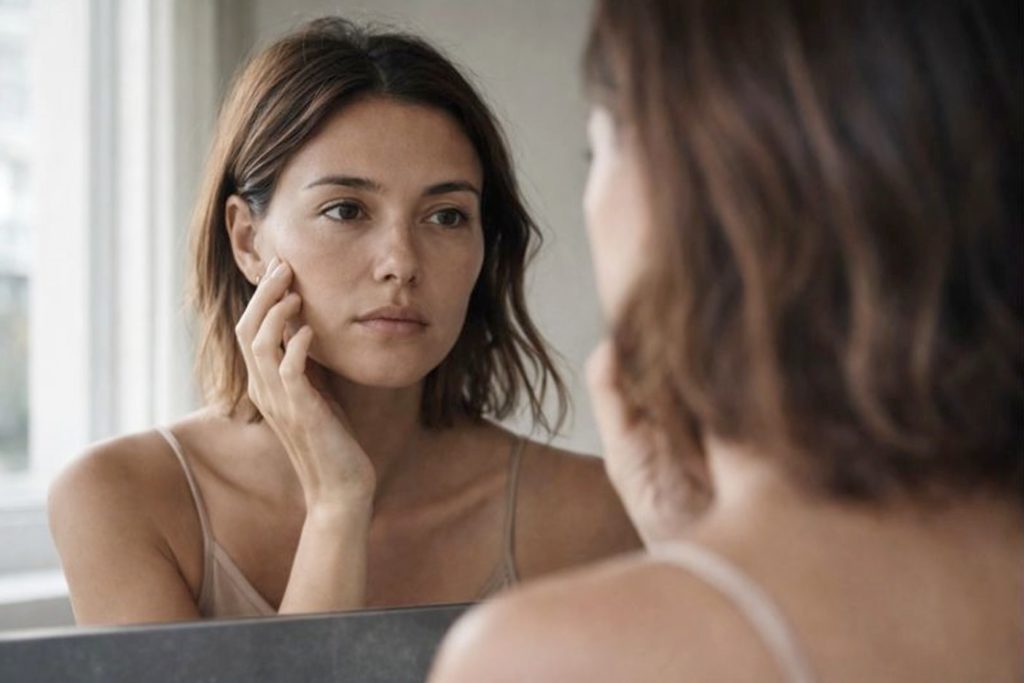
You catch your reflection in the mirror.
The color is there — unmistakably.
And yet something feels off.
Too sharp.
Too flat.
Too obvious.
Not sun-kissed.
Just… artificial.
That’s usually when people decide that self-tanner “just doesn’t work for them.”
But that conclusion skips the real issue.
Because the problem usually isn’t self-tanner itself.
It’s the way most people approach the idea of looking naturally tanned in the first place.
So let’s slow this down.
Who this is for
This article is for readers who are trying to understand why tanning results often look unnatural even when the product is technically “working.”
You might be:
- frustrated by self-tanner that looks fine on others but wrong on you,
- unsure whether the issue is formula, skin type, or expectations,
- more interested in natural appearance than dramatic color change.
You’re not looking for application tips.
You’re looking for clarity.
Who this is NOT for
This is not for readers who want:
- step-by-step tanning instructions,
- product rankings or guarantees,
- advice on how dark to go or how fast.
We’re not optimizing outcomes.
We’re examining how the result is framed — and why that framing matters.
The real problem isn’t color — it’s control
Most complaints about self-tanner sound familiar:
Uneven patches.
Unexpected orange tones.
Dry areas suddenly amplified instead of softened.
On the surface, this looks like a formula issue.
In practice, it’s usually a control issue.
Self-tanner is often treated like makeup:
apply once, get instant payoff, move on.
But skin doesn’t behave like a flat surface.
It absorbs unevenly.
It reacts differently depending on hydration, texture, and recent habits.
And it rarely responds well to “all-at-once” solutions.
This is the first decision marker.
When people say self-tanner looks fake, they’re often reacting not to the product — but to a mismatch between how skin works and how the result was expected to appear.
Why natural sun exposure doesn’t solve the problem
At this point, many people swing to the opposite idea.
“If self-tanner looks fake, maybe real sun is better.”
It feels intuitive.
Sun exposure is gradual.
The change isn’t immediate.
But this swaps one kind of loss of control for another.
Sun exposure doesn’t create uniform results either:
- different areas darken at different speeds,
- texture still shows unevenly,
- tone changes without asking permission.
And unlike cosmetic color, sun-induced change doesn’t reset cleanly.
It accumulates.
So the real question isn’t self-tanner vs sun.
It’s whether a natural-looking tan is possible without giving up control over how skin responds.
What actually makes a tan look natural
When people describe a “good” tan, they rarely talk about depth or darkness.
They talk about balance.
Natural-looking tans tend to share a few quiet traits:
- gradual development instead of instant payoff,
- layering that follows skin texture rather than masking it,
- tone that supports natural coloring instead of overriding it,
- enough hydration that texture isn’t exaggerated.
Notice what’s missing.
No obsession with speed.
No push toward maximum color.
No single-application miracle.
Natural results usually come from systems that work with skin behavior, not against it.
Decision marker: speed vs coherence
At this point, two different decision logics tend to collide.
One is speed-driven:
- visible change as quickly as possible,
- dramatic contrast,
- immediate reassurance that “something happened.”
The other is coherence-driven:
- color that integrates gradually,
- fewer visual shocks,
- results that don’t need explaining.
Most disappointment comes from using speed-based expectations to judge coherence-based results.
The product didn’t fail.
The framework did.

The option many people skip — and why it behaves differently
This is where a lot of people quietly opt out.
Not because better approaches don’t exist —
but because they don’t promise overnight transformation.
Gradual tanning systems operate on a different assumption.
They allow color to build over time.
They let skin respond based on its actual condition.
They reduce sudden contrast that signals “product” rather than “complexion.”
Instead of forcing an instant outcome, they create space for adaptation.
That difference sounds subtle.
In real life, it’s often decisive.
A simplified view of the trade-off
| What feels appealing | What often causes problems |
|---|---|
| Instant color | Loss of tonal control |
| One-step application | Amplified texture differences |
| Dramatic payoff | Artificial contrast |
This isn’t a judgment table.
It’s a map of expectations.
What you optimize for shapes what you notice — and what you regret.
Who this approach tends to work for
This way of thinking resonates most with people who:
- prefer subtle improvement over dramatic change,
- want skin to look healthier, not just darker,
- dislike obvious cosmetic effects,
- value predictability over speed.
If the goal is comfort in your own skin — not commentary on your color — this logic usually fits better.
Who this is NOT for
It’s equally important to name limits.
This approach may frustrate people who:
- expect visible results overnight,
- want very dark or high-contrast tanning effects,
- prefer one-time solutions,
- don’t want any routine adjustment.
Gradual systems trade speed for control.
That trade-off is intentional.
FAQ
Does self-tanner damage skin?
Most modern formulas are cosmetic rather than UV-based, but outcomes still depend on formulation quality and how skin responds over time.
Why does self-tanner sometimes look orange?
Rapid color development and mismatched undertones often play a role. Slower buildup tends to reduce that contrast.
Is gradual tanning better for uneven texture?
Often, yes — because it allows tone to develop alongside texture instead of highlighting differences.
How long does a natural-looking tan usually last?
Subtle results often fade more evenly, which makes maintenance feel less noticeable.
What happens after the next step
After reading this, the next step isn’t choosing a product.
It’s reframing the goal.
If natural appearance, tonal balance, and control matter more than speed, it makes sense to explore approaches designed around how skin behaves over time, not just how fast color appears.
Some modern formulations are built specifically around that logic — gradual development, tonal control, and skin compatibility — rather than instant payoff.
Exploring how one such approach is designed can help clarify whether this framework aligns with your expectations.
Looking at how those systems work — and who they’re designed for — is often more useful than chasing another instant-glow promise.
Editorial thesis
A natural-looking tan is less about color payoff — and more about respecting how skin accepts change.
Editorial team at BeautyHealth.top
Research-based consumer guides