When Sunglasses Become Part of Everyday Visual Comfort — Not Just a Fashion Choice
Most people think of sunglasses as seasonal.
Something for summer.
Something for vacations.
Something that lives in a bag until the sun feels “strong enough.”
But that framing misses what sunglasses quietly do in everyday life — especially for people who move constantly between screens, outdoor light, and artificial indoor environments.
This isn’t about style.
And it’s not about medical correction.
It’s about visual comfort as a daily condition, not a problem waiting to be fixed.
Let’s slow this down.
Who this is for
This article is for readers who are trying to understand why visual fatigue builds up even when eyesight is technically fine.
You might be:
- spending long hours switching between screens and daylight,
- feeling that light is more tiring than it used to be,
- adjusting constantly without labeling it as an “eye issue.”
You’re not looking for treatment.
You’re looking for context.
Who this is NOT for
This is not for readers who want:
- medical explanations or diagnoses,
- corrective eyewear advice,
- guarantees about eye health or performance.
We’re not fixing vision.
We’re examining how people manage light exposure in everyday life.
Visual fatigue rarely starts with pain
Eye strain almost never announces itself clearly.
It starts quietly:
- eyes feel tired earlier than expected,
- brightness feels harsher than it used to,
- blinking increases without conscious notice,
- screens and outdoor light feel equally draining.
Most people don’t call this a problem.
They adapt.
They dim screens.
They squint outside.
They tolerate discomfort because it doesn’t feel serious enough to justify attention.
This is the first decision marker.
Discomfort that can be worked around is rarely questioned — even when it slowly reshapes daily limits.
Why light exposure matters more than people expect
Modern visual environments are built on contrast.
Bright outdoor light → dim interiors
Screens → reflections → glare
Natural daylight → artificial LEDs
Sunglasses are usually discussed as UV protection tools — which they are — but their role in managing visual load often goes unnoticed.
Not all visual fatigue comes from eyesight.
A large part of it comes from uncontrolled light intensity and constant transitions.
That’s where everyday sunglasses quietly enter the picture.
Sunglasses as a comfort tool, not a correction
There’s an important distinction here.
Correcting vision
vs
Supporting visual comfort
Sunglasses don’t “fix” eyes.
They reduce unnecessary strain during everyday transitions.
Especially when they are:
- lightweight enough for extended wear,
- balanced so pressure doesn’t build over time,
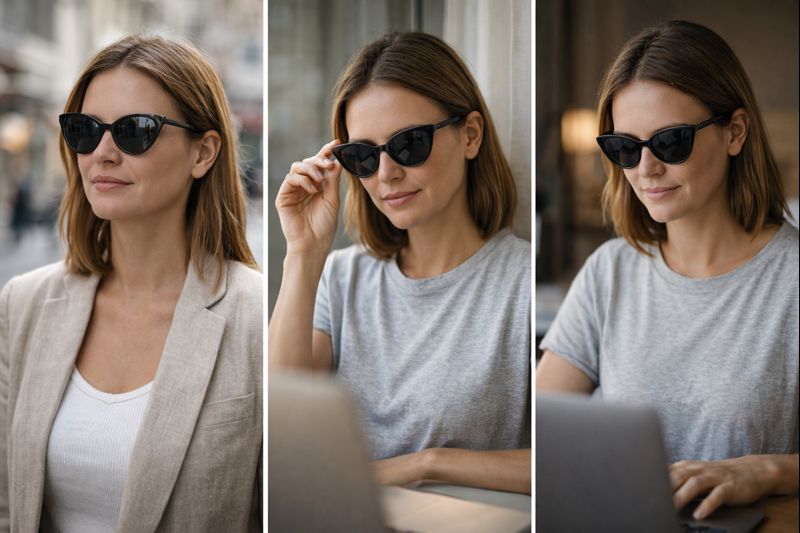
- designed for movement and mixed environments — not just driving or beaches.
This is why more people now treat sunglasses like part of their daily setup.
Not essential.
But noticeable once removed.
Decision marker: occasional protection vs daily baseline
Most people still evaluate sunglasses through an event-based logic:
- strong sun,
- specific activities,
- short-term exposure.
Everyday comfort follows a different logic.
It asks:
“How does my visual system feel across an entire day?”
That shift changes what matters.
Not how striking they look at first glance —
but how neutral they feel after an hour.
Choosing everyday sunglasses isn’t about trends
One of the most common mismatches comes from choosing sunglasses the same way people choose accessories.
Color first.
Brand second.
Comfort last.
For everyday wear, the priorities tend to invert:
- frame weight over time,
- how they sit during movement,
- lens balance in mixed lighting,
- whether they fade into awareness rather than demand it.
The best everyday sunglasses are often the ones you forget you’re wearing.
That’s not accidental.
When browsing makes more sense than recommendations
There is no single pair that works universally.
Face shape.
Light sensitivity.
Daily rhythm.
Tolerance for pressure or tint.
That’s why rigid “best sunglasses” lists often disappoint.
For readers who want to explore everyday eyewear designed around comfort rather than correction, browsing can be more useful than following recommendations — especially when variety matters more than promises.
For example, some people prefer to simply explore women’s sunglasses collections built for regular wear, without medical framing or performance claims.
You can explore one such collection here:
!!!!!!
No assumptions.
No pressure.
Just options.
Who this approach tends to work for
This perspective usually resonates with people who:
- move frequently between screens and daylight,
- feel visual fatigue without a diagnosis,
- want comfort without committing to corrective eyewear,
- prefer choosing based on feel rather than claims.
Who this is NOT for
It may not be helpful if:
- you’re seeking medical treatment or correction,
- you expect sunglasses to solve eye health issues,
- you want a single “perfect” answer.
Comfort tools support habits.
They don’t replace care.
FAQ
Are sunglasses useful indoors?
Sometimes. Especially in bright interiors or near windows where glare is persistent.
Do sunglasses prevent eye strain?
They don’t prevent it entirely, but they can reduce visual load in certain environments.
Is this about UV protection or comfort?
Both exist, but this article focuses on comfort and light management rather than protection alone.
Why does comfort matter if eyesight is fine?
Because visual fatigue isn’t always a vision problem — often it’s an environment problem.
What happens after the next step
After reading this, the next step isn’t buying anything.
It’s noticing.
You may start to observe:
- when light feels unnecessarily harsh,
- how often you adapt without thinking,
- where small adjustments might reduce daily friction.
Sunglasses won’t solve visual fatigue.
But when chosen as everyday comfort tools rather than seasonal accessories, they can quietly lower the baseline.
Not a fix.
Not a cure.
Just a gentler way to move through light.
Editorial thesis
Sunglasses, when treated as comfort tools rather than fashion statements, help manage everyday visual load — quietly and cumulatively.
Editorial team at BeautyHealth.top
Research-based consumer guides